The Szechenyi baths open at six in the morning. Between six and about nine the outdoor pools hold a few dozen people, most of them regulars doing lengths or playing chess on the floating boards, and the water is 38 degrees while the air in January is below freezing and the steam sits over the surface in a sheet. By eleven the same pools hold several hundred people and a stag party. The entire difference is three hours and about the same money.
Two cities that were joined in 1873
Buda is the hilly west bank with the castle and the old streets; Pest is the flat east bank with the boulevards, the Parliament and almost all the nightlife. They were separate towns, along with Obuda to the north, until they merged in 1873, and the character difference has not softened much since. Visitors staying in Pest tend to see Buda for an afternoon and vice versa, which is roughly the right ratio for one day.
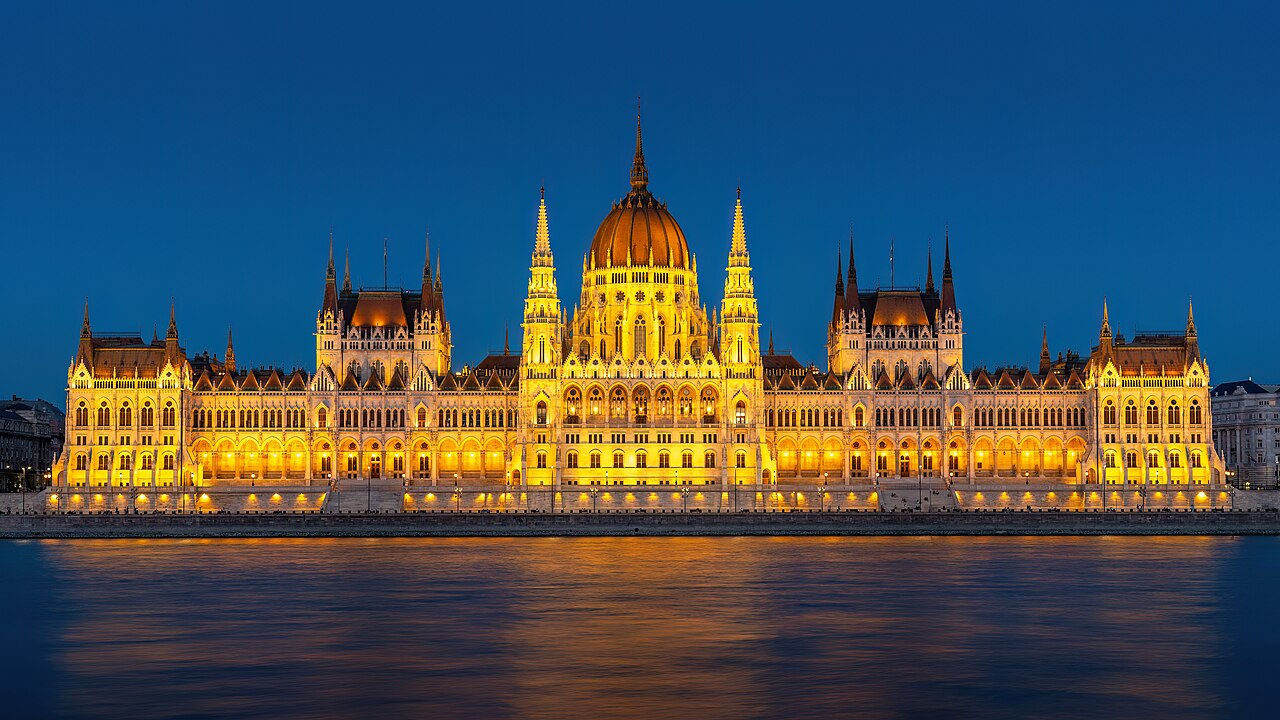
The Danube between them is 350 metres wide here. Every crossing is worth doing on foot at least once.
The Chain Bridge, opened in 1849 and the first permanent bridge between the two banks, reopened in 2023 after a long reconstruction and now carries buses, bicycles and pedestrians but no private cars.
The Parliament, from outside and possibly inside
Hungary’s Parliament is the third largest in the world, has 691 rooms, and was finished in 1902 for a country that lost two thirds of its territory eighteen years later. It is visited on guided tours only, in fixed language slots, and those slots sell out days ahead in season; the Hungarian Crown Jewels are inside, under guard, and photography of them is not allowed.
If the tour is full, the building is at its best from the outside anyway, seen from the Buda embankment or from a boat at dusk when the floodlights come on.
A short walk south along the river, at the edge of the water, sixty pairs of iron shoes are bolted to the stone. The memorial marks the Jews shot into the Danube by the Arrow Cross militia in the winter of 1944 and 1945, told to remove their shoes first because leather was worth money. There is no ticket, no barrier and almost no signage, and people leave candles in them.
The Buda hill, and the funicular question
The Castle Hill can be reached by the Budavari Siklo funicular from the Chain Bridge, which is charming, costs several times a transport fare and has a queue. Bus 16 goes up the same hill on a normal ticket. The walk up the stepped path beside the funicular takes about twelve minutes and is free.
Up top, the Fisherman’s Bastion is the neo-Romanesque terrace in every photograph of the city, built between 1895 and 1902 with seven towers for the seven Magyar tribes. Most of it is free to walk on; only the upper turrets are ticketed, and the view from the free level is barely distinguishable.
Matthias Church next door has a roof of coloured Zsolnay tiles and an interior painted floor to ceiling in patterns that look more Ottoman than Catholic, which is not an accident: it spent 150 years as a mosque.
Lunch, and what Hungarian food actually is
Goulash in Hungary is a soup, not a stew, and asking for it as a main course marks you immediately. The thick paprika stew that most of Europe calls goulash is porkolt here, and the version with sour cream is paprikas. Lard, onion and paprika do most of the work in all three, and vegetarians have a harder time in traditional restaurants than the menus admit.
The Great Market Hall at Fovam ter is worth an hour. The ground floor is produce, paprika, salami and pickles sold to people who cook; the upper gallery is food stalls and souvenirs sold to people who do not. Langos, deep-fried dough with sour cream and grated cheese, is the thing to eat up there, and it is enormous.
The market closes on Sundays and shuts early on Saturdays, around three in the afternoon.
The baths, properly
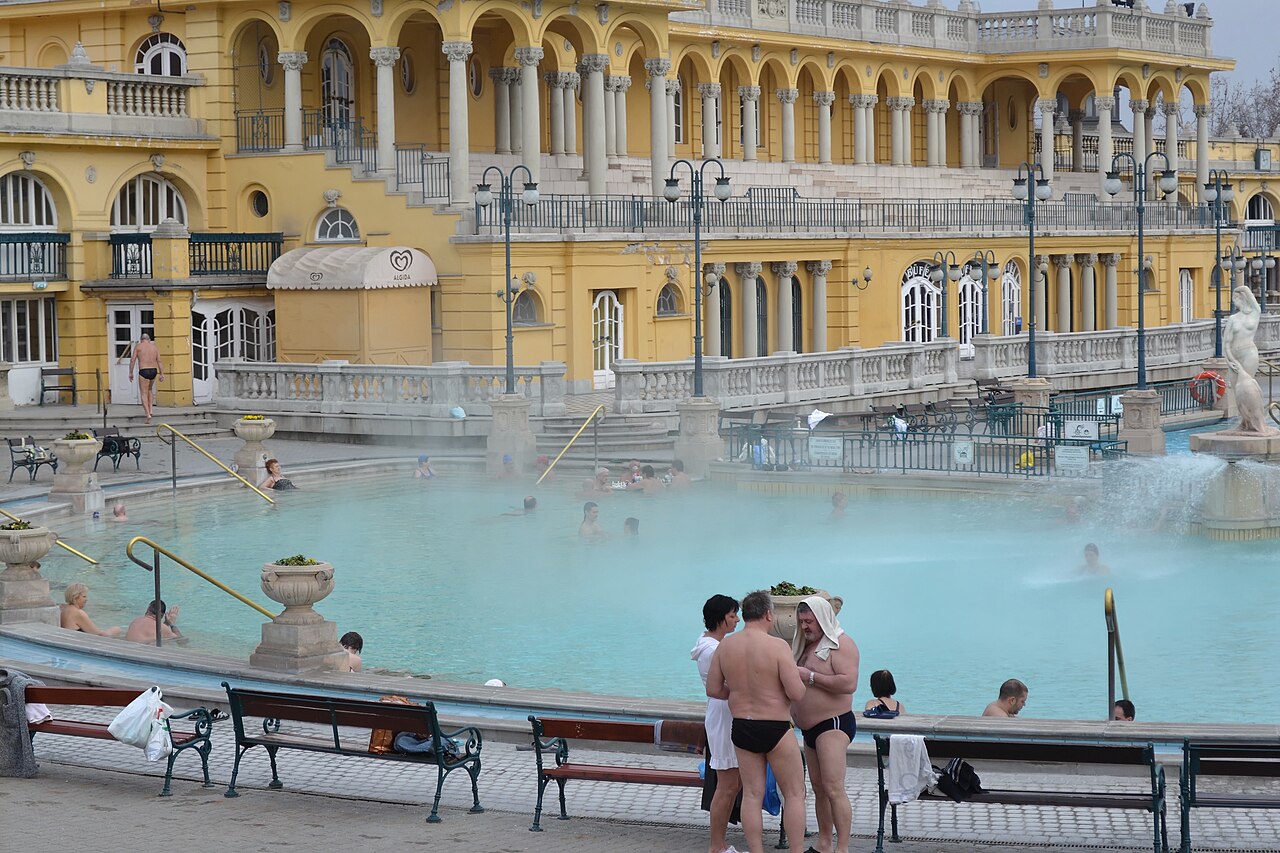
Budapest sits on around 120 thermal springs and has been using them since the Romans. Szechenyi in the City Park is the large one, neo-baroque and yellow, with three outdoor pools and fifteen indoor. Gellert is the art nouveau one, tiled and quieter. Rudas keeps an Ottoman octagonal pool from the sixteenth century under an original dome and still runs single-sex days during the week.
Bring a towel, flip-flops and a swimming cap for the lap pool. All three are rentable at a markup that assumes you forgot.
The cabin and locker distinction on the ticket confuses everyone: a cabin is a private changing room you keep for the day, a locker is a locker. The difference is small and worth paying.
Ruin bars, which were derelict buildings first
Szimpla Kert opened in 2002 in an abandoned apartment block in the old Jewish quarter, filled with furniture nobody wanted, and became the template for a whole category. The formula is a condemned courtyard building, mismatched chairs, plants, a bathtub sofa, and cheap drinks; the district around Kazinczy utca now has a dozen of them.
Szimpla itself is fully on the tourist circuit and gets very full after ten. It also runs a farmers’ market in the same courtyard on Sunday mornings, which is a much stranger and better experience than the bar.
The quarter around it is the historic Jewish district, and the Dohany Street Synagogue at its edge is the largest in Europe, seating 3,000. It charges admission and closes on Saturdays.
Budapest is where a lot of longer European trips turn round. North on the same rail line, Vienna is two and a half hours away, and Prague about seven.
Book the trip you have just read about
These are the companies we use ourselves, and what each one is actually good at.
| Provider | Best for | Go to provider |
|---|---|---|

|
Hotels & apartments The widest choice of places to sleep, and the Genius discount starts on booking number one. Read our Booking.com review | Check hotel prices at Booking.com |

|
Flights Live fares from airlines and booking sites side by side, one-click booking, and a refund guarantee you can add to any ticket. Read our Soar review | Check flight prices at Soar |

|
Whole homes A front door of your own, with a kitchen and a washing machine, for a weekend or a month. Read our Airbnb review | Check homes at Airbnb |

|
Luxury hotel perks Breakfast for two and a 4pm checkout at more than 1,900 hotels — if you hold the card. Read our American Express Travel review | See the hotels at American Express Travel |

|
Flight + hotel packages Flight, hotel and car in one basket, on one bill, with one rewards balance across three brands. Read our Expedia Group review | Check package prices at Expedia Group |

|
All-inclusive holidays Plane, hotel, transfer and excursions under one contract, with one number to call when it goes wrong. Read our TUI Group review | Check holiday prices at TUI Group |

|
Small-group tours Groups capped at around twelve, led by somebody who lives in the country you are walking through. Read our Intrepid Travel review | Check tour prices at Intrepid Travel |

|
Tailor-made itineraries A route drawn for you alone, by a company that has been drawing them since 1758. Read our Cox & Kings review | Request a quote at Cox & Kings |

|
Reviews & things to do Check what other travellers actually found, before the money leaves your account. Read our Tripadvisor review | Read the reviews at Tripadvisor |