Every 16 June, several thousand people walk around Dublin with a paperback, eating a gorgonzola sandwich in a pub on Duke Street and reading out passages at street corners, because that is the day on which the whole of Ulysses takes place in 1904. The addresses in the novel are real and most of them are still standing, which makes the city one of the few in Europe where a book functions as a street map.
You do not need to have read it. What the habit tells you is how much of Dublin is small enough to walk and specific enough to be worth walking: a city of about 600,000 in the centre, laid out along one river, with the two universities, the parliament, the cathedrals and the pubs inside a square mile and a half.
The one caution about the standard opening move. The Book of Kells is shown two pages at a time in a dim case, in a room where a hundred other people are also trying to see two pages, and the Long Room upstairs has stood empty or partly empty since 2023 while its 200,000 books go through conservation. The room is still extraordinary; the shelves are not full.
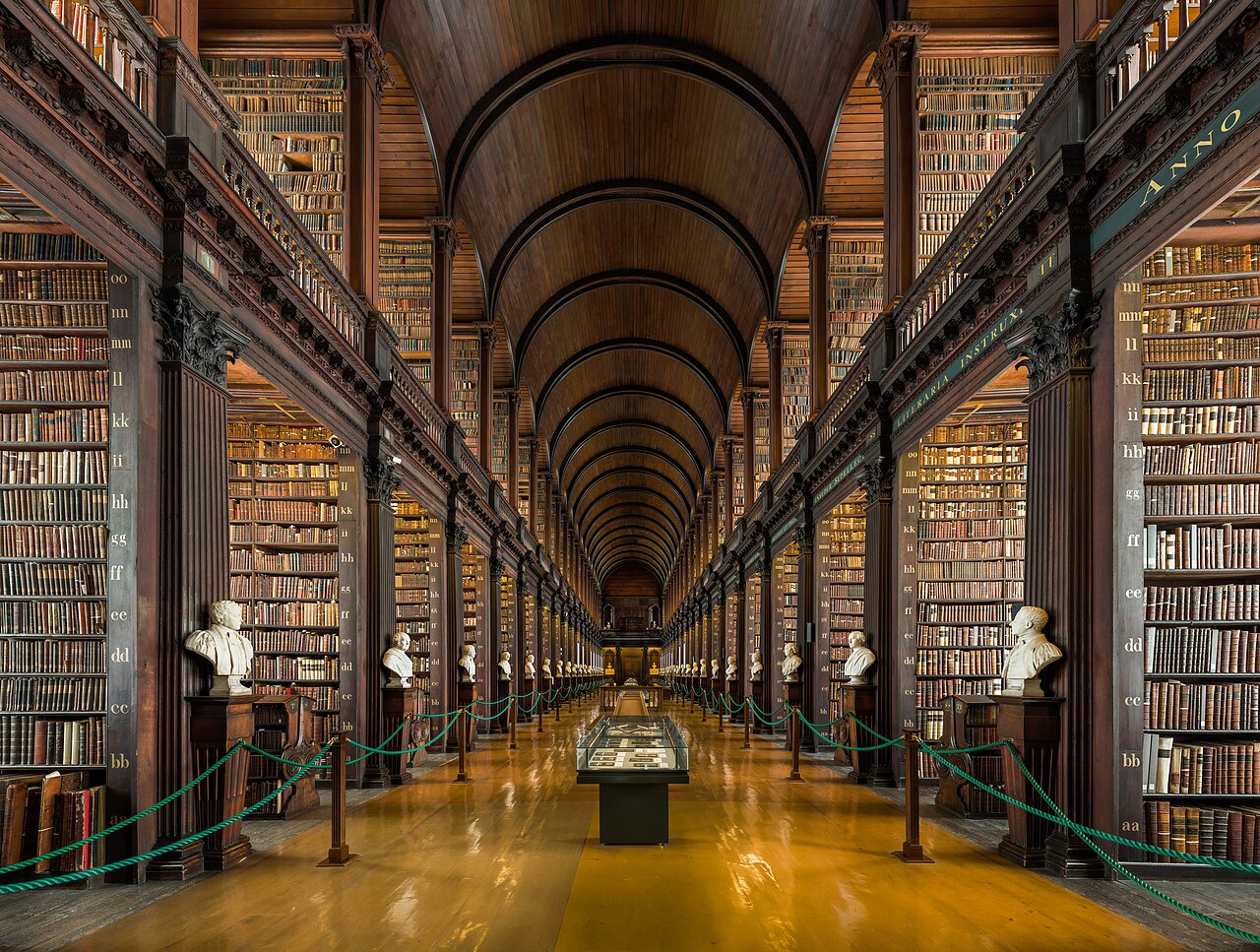
Trinity, which is a working university
The college was founded in 1592 and sits on 47 acres in the middle of the city, behind a wall, with cricket played on the lawns in summer. Students live and study here, and the tourist route through Front Square is a corridor through somebody’s campus.
Walking into the grounds is free. The paid ticket is for the Kells exhibition and the library, timed and booked online, and it sells out on summer mornings.
The student-led walking tours that start inside the gate are run by undergraduates, last about half an hour, and are among the better small purchases in the city: the guides are opinionated, funny about their own institution, and will tell you which windows the exam results are posted under.
Kilmainham Gaol, which explains the country
Modern Ireland is difficult to understand without this building. The leaders of the 1916 Easter Rising were executed in the stonebreakers’ yard here over ten days in May, one of them, James Connolly, tied to a chair because his wounds meant he could not stand. The executions turned public opinion in Dublin from hostility towards the rebels to support, and the state that followed came out of that shift.
Entry is by guided tour only, tickets released online at a fixed time and gone within minutes in summer. There is no walk-up option worth relying on. This is the second booking of a Dublin day, after Trinity, and the one people most often fail to make.
The Victorian east wing, with its glass roof and iron walkways, is the part that turns up in films. The older west wing, with cells built for one prisoner and used for five during the Famine, is the part that stays with you.
It is four kilometres west of the centre. Bus 69 or the Luas red line to Suir Road gets you there.
Georgian Dublin, and the doors
The squares south of the river, Merrion and Fitzwilliam, hold long terraces of red brick built between about 1750 and 1830, each with a fanlight over a painted door. The often repeated story is that the doors were painted in different colours so drunk husbands could find their own house, which is a good story and almost certainly invented; the plainer explanation is that Georgian planning rules controlled the brick and the windows but not the paint.
Number 29 Fitzwilliam Street was preserved as a middle-class Georgian home and is worth an hour if the period interests you. Merrion Square itself, a public park since 1974, has a reclining statue of Oscar Wilde on a rock at the northwest corner, who was born across the road.
The National Gallery on the west side of the square is free, holds the Caravaggio Taking of Christ that was found hanging unrecognised in a Jesuit dining room in 1990, and is a good hour out of the rain.
The pub, at the right time of day
Temple Bar is where visitors drink and where Dublin does not. Prices there are the highest in the city by a margin that gets written about in the Irish press every summer, the live music starts early and is played at people, and the whole quarter operates on the assumption that its customers will not be back.
Go instead to a pub at five in the afternoon, on a weekday, somewhere like Kehoe’s on South Anne Street, the Long Hall on South Great George’s Street or Mulligan’s on Poolbeg Street. At that hour the room is half full, the conversation is between people who know each other, and a pint of stout is poured in two stages with a pause between them, which takes about two minutes and cannot be hurried.
Do not ask for it to be hurried.
Traditional music sessions are a separate thing from a pub with a band. A session is musicians sitting in a circle, usually in a corner, playing to each other rather than to the room, and they mostly start around nine. The Cobblestone in Smithfield is the one musicians name.
The river, at the end
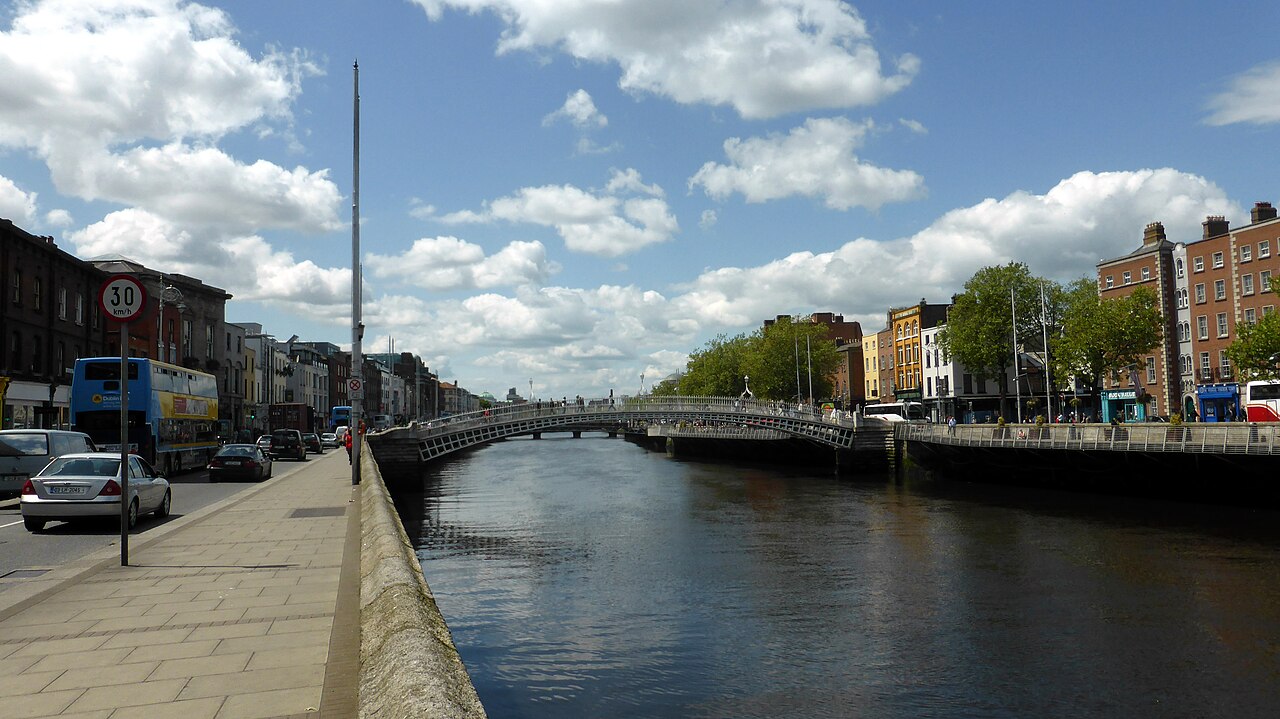
The Liffey divides the city and the division is real: northside and southside carry class associations that Dubliners joke about constantly and mean at least partly seriously. The Ha’penny Bridge, cast iron, opened in 1816, charged a halfpenny toll until 1919 and gave itself its name.
Walk east along the quays at dusk towards the Samuel Beckett Bridge, which is shaped like a harp lying on its side and turns 90 degrees to let ships through. The docklands beyond it are all glass and tech offices now, and the contrast with the eighteenth-century warehouses a few hundred metres upstream is the shortest possible summary of what happened to Dublin after 1995.
The nearest comparable day out is Edinburgh, an hour by air and a similar size of old city.
Book the trip you have just read about
These are the companies we use ourselves, and what each one is actually good at.
| Provider | Best for | Go to provider |
|---|---|---|

|
Hotels & apartments The widest choice of places to sleep, and the Genius discount starts on booking number one. Read our Booking.com review | Check hotel prices at Booking.com |

|
Flights Live fares from airlines and booking sites side by side, one-click booking, and a refund guarantee you can add to any ticket. Read our Soar review | Check flight prices at Soar |

|
Whole homes A front door of your own, with a kitchen and a washing machine, for a weekend or a month. Read our Airbnb review | Check homes at Airbnb |

|
Luxury hotel perks Breakfast for two and a 4pm checkout at more than 1,900 hotels — if you hold the card. Read our American Express Travel review | See the hotels at American Express Travel |

|
Flight + hotel packages Flight, hotel and car in one basket, on one bill, with one rewards balance across three brands. Read our Expedia Group review | Check package prices at Expedia Group |

|
All-inclusive holidays Plane, hotel, transfer and excursions under one contract, with one number to call when it goes wrong. Read our TUI Group review | Check holiday prices at TUI Group |

|
Small-group tours Groups capped at around twelve, led by somebody who lives in the country you are walking through. Read our Intrepid Travel review | Check tour prices at Intrepid Travel |

|
Tailor-made itineraries A route drawn for you alone, by a company that has been drawing them since 1758. Read our Cox & Kings review | Request a quote at Cox & Kings |

|
Reviews & things to do Check what other travellers actually found, before the money leaves your account. Read our Tripadvisor review | Read the reviews at Tripadvisor |