Zurich is repeatedly ranked among the two or three most expensive cities in the world, and the numbers hold up: a beer in a normal bar is 7 to 10 francs, a plate of food in a modest restaurant 25 to 35, as checked in September 2026. Public transport is excellent and a day ticket is around 9 francs.
What is free is the water, and the water is the best thing here.
Swimming in the Limmat
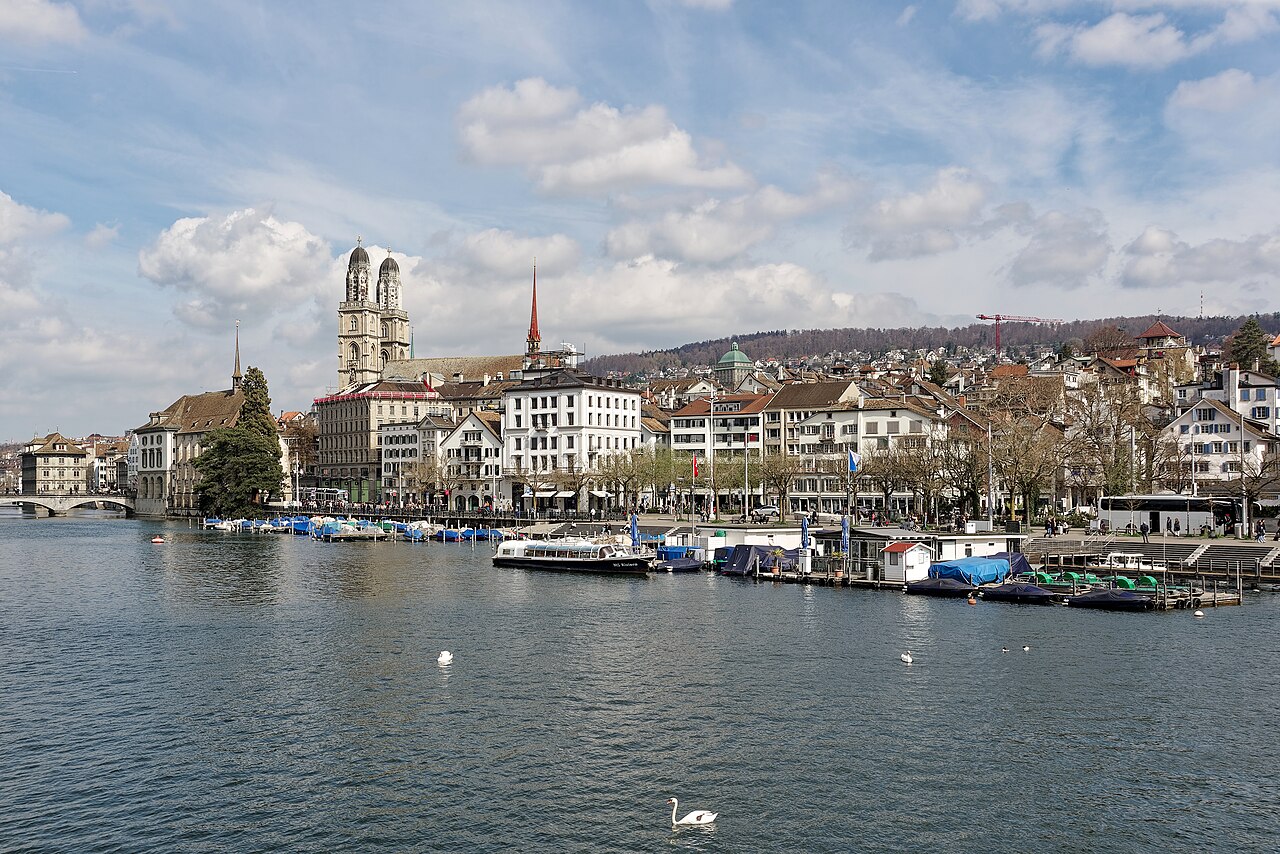
The Limmat leaves the lake in the middle of the city, clear and cold and fast, and Zurich swims in it. There are wooden bathing stations built out over the water, called Badis, open roughly from May to September, most of them free.
Oberer Letten has a 400-metre channel where you get in at the top and let the current carry you down to a ladder. Frauenbad Stadthausquai, in a wooden pavilion from 1888, is women only by day and a bar in the evening. Seebad Enge is on the lake with a sauna in winter.
The water is 18 to 22 degrees in summer and it is drinking-quality. So is the water in the 1,200 public fountains around the city, which run continuously and which people fill bottles from without thinking about it.
In winter some of the same places become saunas over the ice-cold water, which is a different proposition and the locals take it seriously.
Dada, in the bar where it started
On 5 February 1916, in a room at Spiegelgasse 1, a group of refugees and draft-dodgers from the war opened the Cabaret Voltaire and began doing things on stage that had no precedent: sound poems in no language, simultaneous readings, nonsense manifestos. They called it Dada, and the whole of the twentieth century’s avant-garde comes out of that room.
Lenin was living at Spiegelgasse 14, about thirty metres away, at the same time. There is no evidence they ever met, and the coincidence is repeated in every guidebook anyway.
The building was squatted in 2002 to stop it being turned into offices, and it now runs as a museum, bar and performance space. It is small, it is cheap by Zurich standards, and it does not take itself entirely seriously, which is correct.
The two churches, and Chagall’s windows
Huldrych Zwingli started preaching at the Grossmünster in 1519 and the Swiss Reformation followed, which is why the interior is bare. Images were removed, the organ was dismantled, and the plainness you see is deliberate rather than neglectful.
Across the river, the Fraumünster has five stained-glass windows made by Marc Chagall in 1970, when he was 83, each in a dominant colour and each about ten metres high. Photography inside is not allowed and the rule is enforced.
Both towers can be climbed, and the Grossmünster’s is 187 steps for the standard view of roofs, river and lake.
Eating, and what Swiss actually means here
Zurich’s own dish is Zürcher Geschnetzeltes: veal in a cream and white wine sauce with mushrooms, served with rösti, which is grated potato fried into a flat cake. It is rich and it is not a summer lunch.
Fondue and raclette are winter foods from the mountains, and ordering fondue in August marks you out, though restaurants will happily serve it.
Chocolate here is a serious industry rather than a souvenir. Lindt has a museum out at Kilchberg with a chocolate fountain nine metres high and unlimited samples at the end, reachable by boat or bus in about twenty minutes.
The cheapest honest meal in the centre is at a Migros or Coop supermarket restaurant, where a hot plate runs 12 to 18 francs, and Swiss office workers eat there without embarrassment.
The old town, and the guilds
Zurich was run by its craft guilds from 1336 to 1798, and their houses still line the right bank of the river: the carpenters at Zimmerleuten, the shoemakers at Schuhmachern, the boatmen at Schiffleuten, most of them now restaurants in the rooms where the guilds met.
Every April the guilds burn a snowman. Sechseläuten is the spring festival, an effigy called the Böögg is packed with fireworks and set alight at six in the evening on a Monday, and the time it takes for the head to explode is treated as a forecast for the summer. The record is 5 minutes 7 seconds and the worst is over 43.
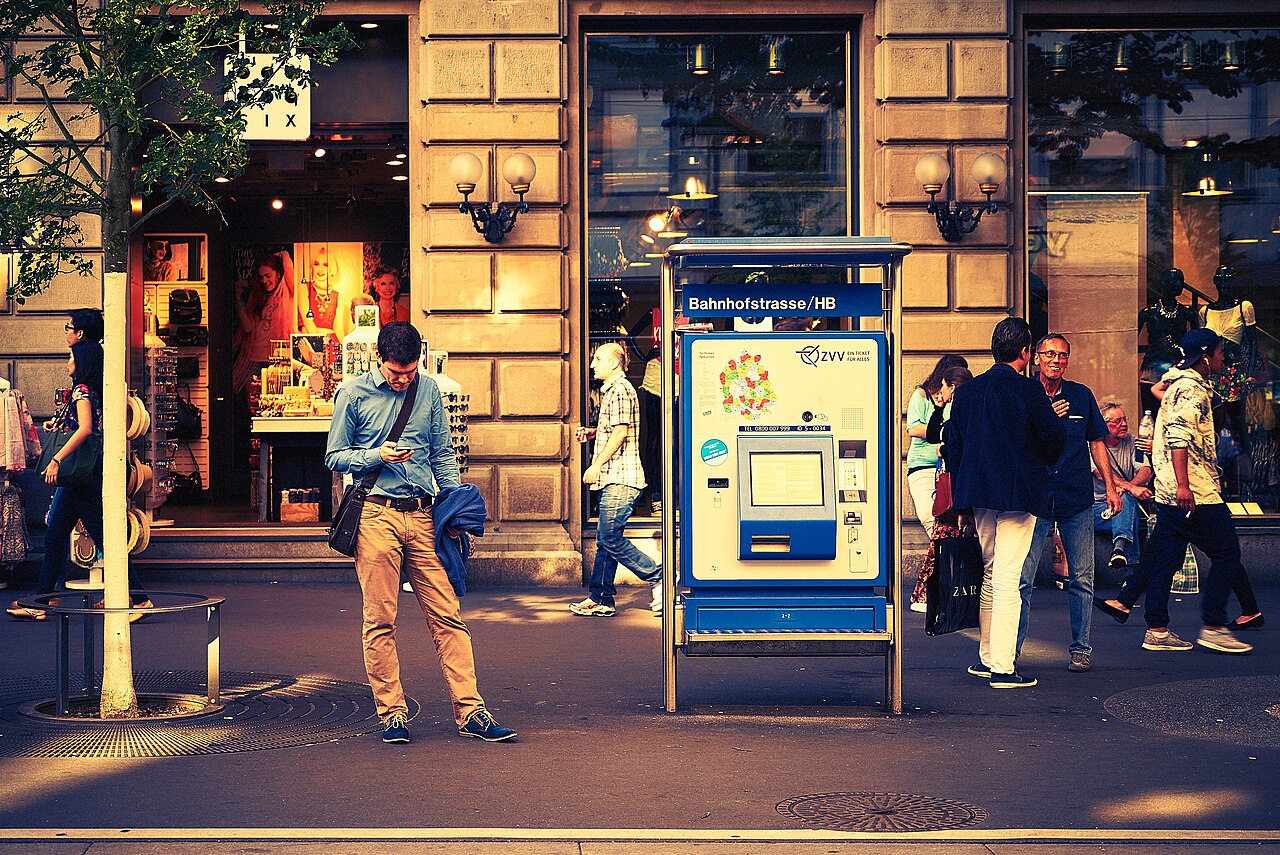
Bahnhofstrasse, running from the station to the lake, is one of the most expensive shopping streets anywhere, and there are bank vaults full of gold under it. Walking down it costs nothing and takes fifteen minutes.
Behind the west end of it, Augustinergasse has the old town’s painted oriel windows, some from the seventeenth century, and almost no one on it.
Uetliberg, and the lake
A train from the main station climbs to Uetliberg at 869 metres in about twenty-five minutes, on an ordinary city ticket. From the top the whole lake stretches south and the Alps stand along the horizon on a clear day, which is not most days.
The ridge walk from there to Felsenegg takes about two hours on a well-marked path, gently downhill, with a cable car at the far end and a boat back across the lake if the timing works.
Lake boats run from Bürkliplatz and the short round trip takes ninety minutes. The Swiss travel pass covers them, which surprises people who assume a boat is extra.
The Gotthard base tunnel, 57 kilometres long and the longest rail tunnel in the world since 2016, puts Milan just over three hours south. Munich is about the same going north.
Book the trip you have just read about
These are the companies we use ourselves, and what each one is actually good at.
| Provider | Best for | Go to provider |
|---|---|---|

|
Hotels & apartments The widest choice of places to sleep, and the Genius discount starts on booking number one. Read our Booking.com review | Check hotel prices at Booking.com |

|
Flights Live fares from airlines and booking sites side by side, one-click booking, and a refund guarantee you can add to any ticket. Read our Soar review | Check flight prices at Soar |

|
Whole homes A front door of your own, with a kitchen and a washing machine, for a weekend or a month. Read our Airbnb review | Check homes at Airbnb |

|
Luxury hotel perks Breakfast for two and a 4pm checkout at more than 1,900 hotels — if you hold the card. Read our American Express Travel review | See the hotels at American Express Travel |

|
Flight + hotel packages Flight, hotel and car in one basket, on one bill, with one rewards balance across three brands. Read our Expedia Group review | Check package prices at Expedia Group |

|
All-inclusive holidays Plane, hotel, transfer and excursions under one contract, with one number to call when it goes wrong. Read our TUI Group review | Check holiday prices at TUI Group |

|
Small-group tours Groups capped at around twelve, led by somebody who lives in the country you are walking through. Read our Intrepid Travel review | Check tour prices at Intrepid Travel |

|
Tailor-made itineraries A route drawn for you alone, by a company that has been drawing them since 1758. Read our Cox & Kings review | Request a quote at Cox & Kings |

|
Reviews & things to do Check what other travellers actually found, before the money leaves your account. Read our Tripadvisor review | Read the reviews at Tripadvisor |