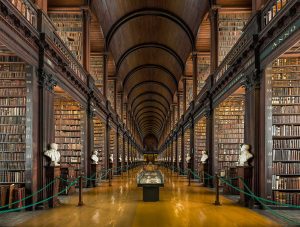
Stand at any junction in the Eixample and look at the corners: they are cut off at 45 degrees, so every crossroads opens into a small octagonal square. Ildefons Cerdà drew the grid that way in 1859, before cars existed, so that horse trams could turn and so that light and air reached the street. The whole district north of the old town is 520 blocks of it.
Cerdà also specified that each block should be built on two sides only, with a garden in the middle. Developers ignored that part within a decade and filled the courtyards in, which is why Barcelona is one of the densest cities in Europe and why the few restored courtyards are worth stepping into when you pass an open gate.
Two things must be booked before the day starts, and neither has a walk-up desk worth queueing at: the Sagrada Familia and the monumental zone of Park Guell. Both sell half-hour entry windows online and both sell out in high season.
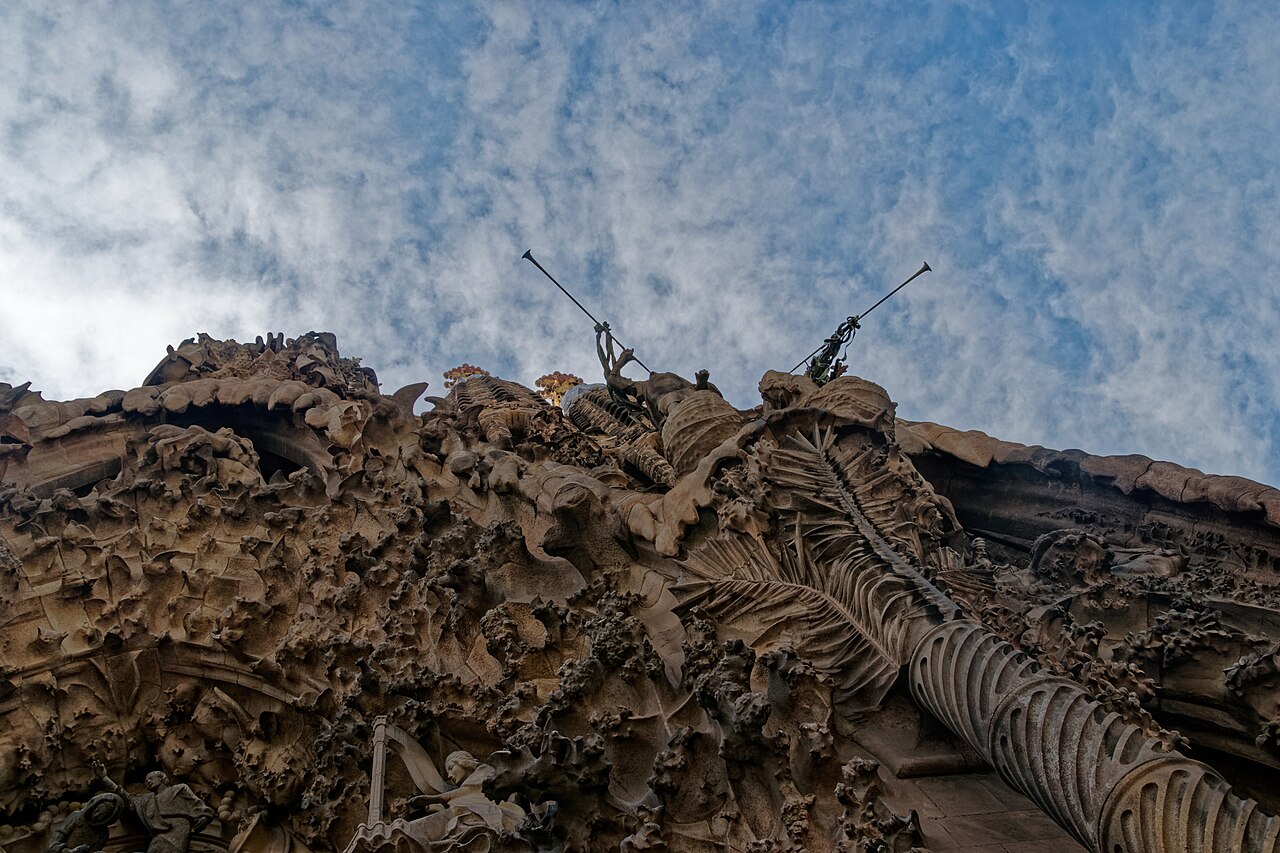
The Sagrada Familia, and the facade most visitors walk straight past
Almost everyone arrives from the metro at Sagrada Familia station on lines L2 and L5, which puts them at the Passion facade: the harsh, angular one, carved by Josep Maria Subirachs from the 1980s onward. The Nativity facade is on the opposite side, facing the park, and it is the one Gaudi actually saw built. Walking the block around the building before going in takes six minutes and changes what you are looking at.
Inside, the thing to time is the light. The east windows are glazed in blues and greens, the west in reds and oranges, so a morning slot fills the nave with cold colour and a late afternoon slot floods it with warm. Neither is better. They are different buildings, and the guides who tell you to come at one specific hour are choosing for you.
The tower lift is a separate ticket, bought at the same time or not at all.
Two rules catch people out. Children under six are not admitted to the towers, and the descent from the Nativity tower is by a narrow spiral stair with no lift, roughly 400 steps, which is a genuine problem for anyone with bad knees. The basilica also enforces covered shoulders and no clothing above mid-thigh, and it turns people away at the door for it in July with no sympathy at all.
Park Guell: the half you pay for and the half you do not
The park was free until 2013. Now the Monumental Zone, meaning the mosaic terrace, the dragon stairway and the hypostyle hall, is ticketed with timed entry, and the rest of the hillside is still open to anyone who walks up. Plenty of visitors buy a ticket without realising that the woodland paths, the viaducts and the best long view over the city cost nothing.
Getting there is the part nobody warns you about. It is a steep climb from Lesseps or Vallcarca metro on line L3, and the outdoor escalators from Vallcarca cut out most of it. The bus that stops closest is the 24.
Allow an hour inside the paid zone. It is small.
Lunch at La Boqueria, on a day it is actually open
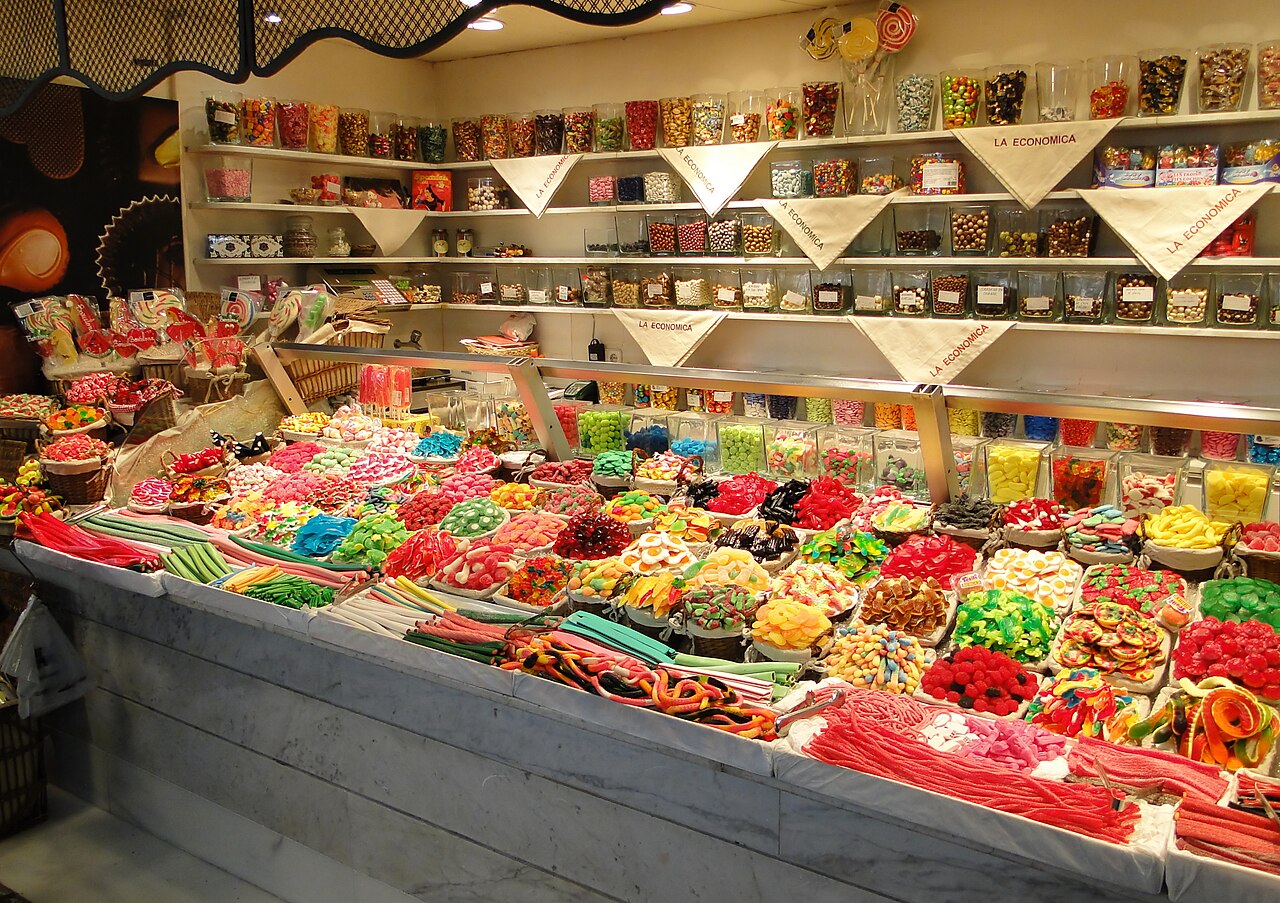
La Boqueria closes on Sundays, and a good number of stalls also shut on Monday mornings. A Sunday itinerary that has the market in it is a copied itinerary.
The front rows, the ones facing the Rambla with the pre-cut fruit cups and the bright juices, are the tourist frontage. Prices there run roughly double what the same fruit costs forty metres deeper into the hall, and the stallholders at the back sell to people who are cooking that evening. The bar counters near the fish section, where you sit on a stool and eat what was landed that morning, are the reason locals still come.
Since 2015 the market restricts guided groups of more than fifteen people during peak hours, after years of aisles becoming impassable. It has made the middle of the day easier to walk through, though Saturday around one in the afternoon is still shoulder to shoulder. Come at eleven if you want to see the produce rather than the backs of other visitors.
Eat at a counter. Standing at a stall with a plate of grilled prawns and a small beer is the honest version of this stop, and it costs less than the photographed platters at the entrance.
The Gothic Quarter, where the map stops helping
South of the Rambla the streets tighten into a grid that predates the grid, and phone navigation loses accuracy between the buildings. This is the one part of the day to do without a route: the cathedral cloister with its thirteen geese, the Roman wall fragments behind Placa Nova, Placa del Rei where the stone is still medieval underfoot.
A practical caution, and it is not a stereotype. Pickpocketing on the Rambla, in the Gothic Quarter and on metro line L3 is organised, skilled and constant, and it is the single most common thing that ruins a day here. Phones go in front pockets, bags go in front of the body, and the man who spills something on your jacket is not apologising.
Sunset at the Carmel bunkers instead of Tibidabo
The concrete platforms on Turo de la Rovira were anti-aircraft positions built in 1937, during the Civil War, and they sit on a bare hilltop with a 360-degree view of the whole city, the Sagrada Familia towers, the port and the sea behind them. It is a twenty-minute climb from bus 119 or a longer one from Alfons X metro.
The site is open air, free, and unstaffed. It gets busy at sunset, and since 2021 the city has closed it overnight after complaints from the neighbourhood about parties, so this is an evening stop and not a night one.
Bring water up with you, because there is nothing to buy at the top and the last shop is well down the hill.
Dinner in El Born, and the hour Spain actually eats
Kitchens in Barcelona open for dinner around half past eight and fill after nine. Arriving at seven means an empty room and, often, a kitchen that has not started, which is why so many visitors conclude the food is aimed at them: at that hour, it is. The bars that do serve at seven are serving the visitor timetable, and they price accordingly. Waiting ninety minutes is the cheapest upgrade available in the city. Menus del dia, the fixed lunchtime menu that runs on weekdays, are a different matter and worth building the middle of the day around.
El Born sits between the Picasso Museum and the Parc de la Ciutadella, and its narrow streets hold the tapas bars that Barcelona residents use on a weeknight. The Santa Maria del Mar basilica anchors the district, and its interior is pure fourteenth-century Catalan Gothic, unusually plain, unusually tall, and free to enter outside ticketed hours. The roof tour is ticketed separately and runs in small groups.
If Spain is a longer trip, the natural pairing is Madrid, two and a half hours away by AVE train, and Seville beyond it.
Book the trip you have just read about
These are the companies we use ourselves, and what each one is actually good at.
| Provider | Best for | Go to provider |
|---|---|---|

|
Hotels & apartments The widest choice of places to sleep, and the Genius discount starts on booking number one. Read our Booking.com review | Check hotel prices at Booking.com |

|
Flights Live fares from airlines and booking sites side by side, one-click booking, and a refund guarantee you can add to any ticket. Read our Soar review | Check flight prices at Soar |

|
Whole homes A front door of your own, with a kitchen and a washing machine, for a weekend or a month. Read our Airbnb review | Check homes at Airbnb |

|
Luxury hotel perks Breakfast for two and a 4pm checkout at more than 1,900 hotels — if you hold the card. Read our American Express Travel review | See the hotels at American Express Travel |

|
Flight + hotel packages Flight, hotel and car in one basket, on one bill, with one rewards balance across three brands. Read our Expedia Group review | Check package prices at Expedia Group |

|
All-inclusive holidays Plane, hotel, transfer and excursions under one contract, with one number to call when it goes wrong. Read our TUI Group review | Check holiday prices at TUI Group |

|
Small-group tours Groups capped at around twelve, led by somebody who lives in the country you are walking through. Read our Intrepid Travel review | Check tour prices at Intrepid Travel |

|
Tailor-made itineraries A route drawn for you alone, by a company that has been drawing them since 1758. Read our Cox & Kings review | Request a quote at Cox & Kings |

|
Reviews & things to do Check what other travellers actually found, before the money leaves your account. Read our Tripadvisor review | Read the reviews at Tripadvisor |