The hot water that comes out of a Reykjavik tap has been underground rather than in a boiler. It arrives from geothermal fields outside the city, pumped straight into the pipes, and it smells faintly of sulphur for the first few seconds. Nearly every building in Iceland is heated this way, which is why a country on the edge of the Arctic burns almost nothing to keep warm.
That plumbing is also why the city has around seven municipal swimming pools, all outdoors, all open year round, and all costing 1,500 krónur, roughly 10 euros at September 2026 rates. Heating them costs the city very little, so they were built the way libraries were built elsewhere.
Locals use them constantly, in January, in the rain, in the dark. The Blue Lagoon, 47 kilometres away and around 12,000 krónur to enter on the cheapest ticket, close to 90 euros, is a fine afternoon and is not this.
The pool rules
You must wash naked with soap before entering the water, without a swimsuit, in the communal shower, and there are diagrams on the wall showing which parts. This is enforced by attendants and it is not negotiable. Icelanders keep very little chlorine in the water precisely because everyone washes properly.
Once in, the pool itself is the least of it. The point is the hot pots, small tubs at 38, 40 and 42 degrees around the edge, where people sit and talk. Laugardalslaug is the big one with the slide. Vesturbæjarlaug is smaller and more local. Sundhöllin, Guðjón Samúelsson’s 1937 building in the centre, has the best architecture.
Sky Lagoon, out at Kársnes, is the closer and cheaper answer if you want the infinity-edge photograph without the drive to Grindavík.
Hallgrímskirkja and Harpa
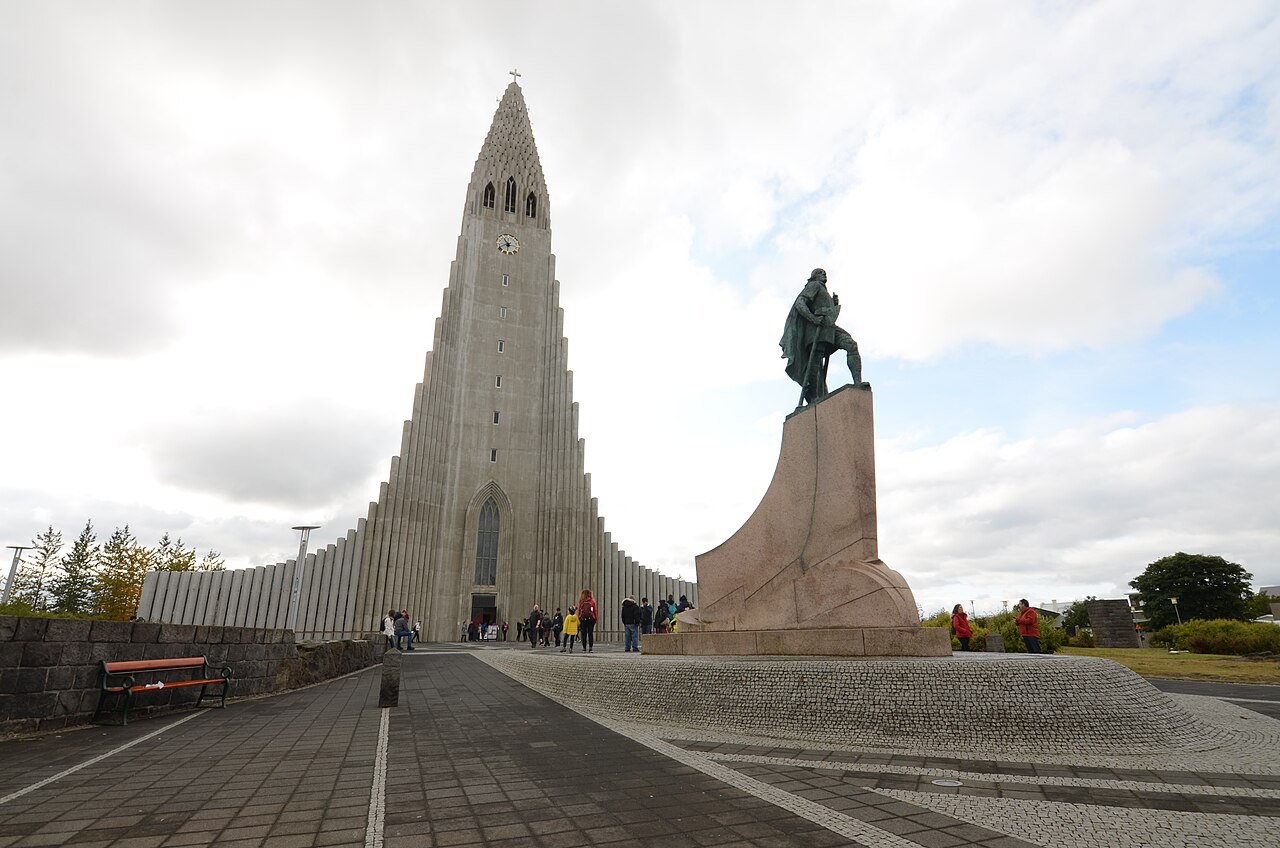
The church on the hill took 41 years to build, from 1945 to 1986, and its concrete facade steps upward in columns meant to suggest basalt, the hexagonal rock that forms when lava cools slowly. At 74.5 metres it is one of the tallest structures in Iceland.
A lift goes up the tower for about 1,400 krónur, and it is the only high viewpoint in the city: coloured tin roofs in every direction, the sea, and Mount Esja across the bay.
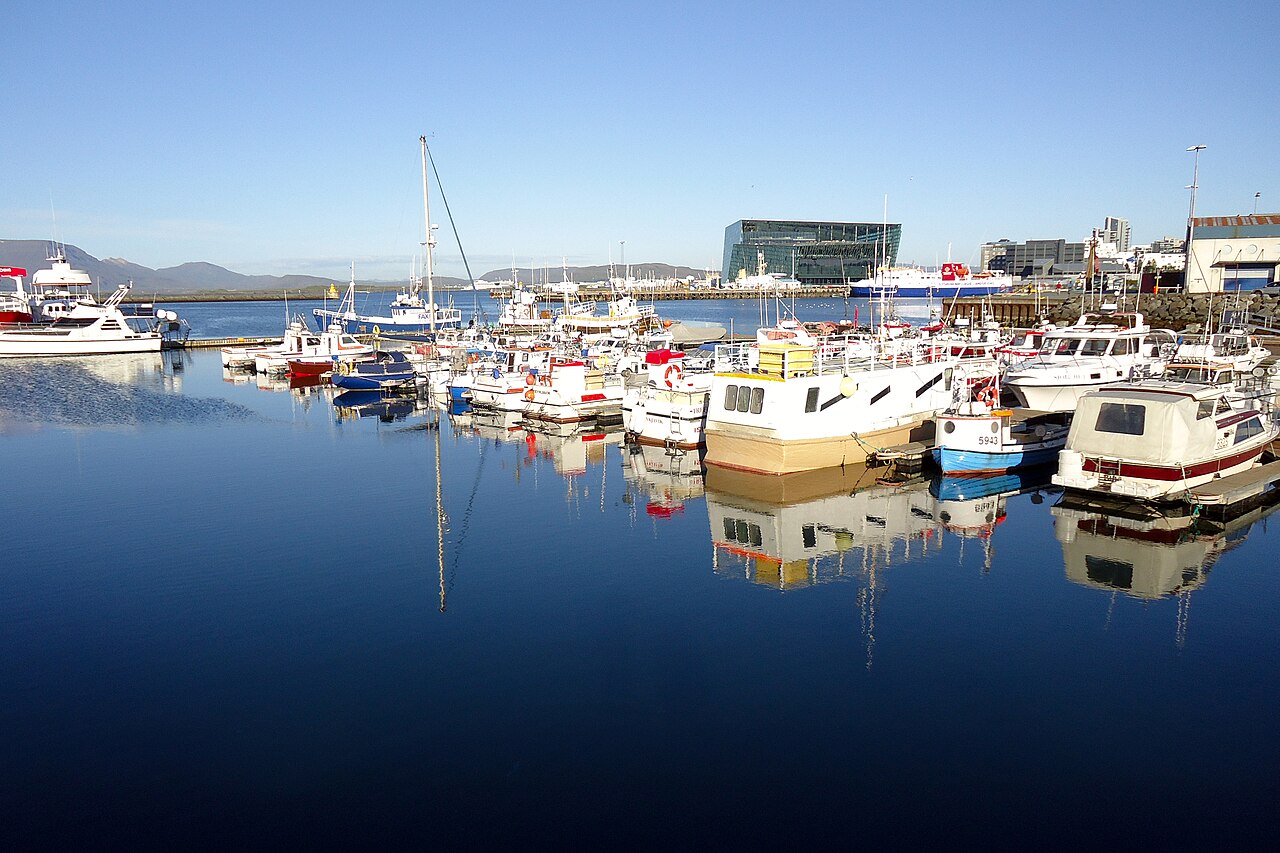
Harpa, the concert hall on the harbour, was half-built when the Icelandic banks collapsed in 2008, and the government finished it because stopping would have looked worse than continuing. Its skin is more than a thousand twelve-sided glass units in a quasi-brick pattern developed with Olafur Eliasson, and it changes colour with the sky and the light behind it.
Walking in costs nothing. Go up the stairs to the top level and look out through the glass, which is the real reason to enter.
The northern lights, honestly
They are not visible in summer, at all, because it does not get dark between roughly late May and late July. The season runs September to April, and it needs a clear sky, solar activity and darkness at the same time, which is not a common combination.
The city itself is too bright. Grótta lighthouse at Seltjarnarnes, twenty-five minutes’ walk from the centre, is where locals go, and it is free.
A three-night trip in October has decent odds and a one-night trip has poor ones. Tour operators usually rebook you free if a trip is clouded out, and that policy is the thing to check before paying.
Eating, and what to skip
The hot dog stand by the harbour, Bæjarins Beztu, has been running since 1937 and sells a lamb-based hot dog with raw and crispy onion, ketchup, sweet mustard and remoulade. Say eina með öllu, one with everything. It costs around 700 krónur and there is usually a queue at two in the morning.
Icelandic lamb is worth the money in a restaurant. So is plokkfiskur, mashed fish and potato with butter and rye bread, which is what people actually cook at home.
Fermented shark, hákarl, is a bar dare rather than a food, and no Icelander eats it outside the midwinter feast. Puffin and whale appear on tourist menus and almost nowhere else, and the whaling industry survives largely on visitors ordering it, which is worth knowing before you do.
Alcohol is sold only in Vínbúðin state shops, which close at six most weekdays, an hour later on Fridays, and do not open on Sundays. A beer in a bar runs 1,400 to 1,800 krónur, and happy hour is a serious institution here rather than a marketing phrase.
The old centre, and how small it is
Reykjavik holds about 140,000 people, and the whole of the old town can be crossed on foot in twenty minutes. Laugavegur is the main street, lined with wooden and corrugated-iron houses painted in strong colours because the iron needed protecting and the paint was cheap.
The corrugated iron arrived from Britain in the nineteenth century and became the national building material, which is why a city in the North Atlantic looks the way it does.
Tjörnin, the pond in the middle, is heated at one corner by geothermal water so a patch stays unfrozen all winter and every bird in the area crowds into it. The city hall sits on stilts in the same pond and has a three-dimensional relief map of Iceland inside, free to walk in and look at.
The Golden Circle, if you have the day
Three sites within a 250-kilometre loop east of the city, doable in six to eight hours by hire car or coach. Þingvellir is the rift valley where the North American and Eurasian plates pull apart and where the Icelandic parliament met outdoors from 930. Geysir gives its name to every geyser in the world; the original is dormant, and the one that erupts every few minutes is Strokkur. Gullfoss drops the Hvítá river 32 metres in two stages.
Weather closes roads without much warning between October and April, and the site to check is road.is, updated by the road administration through the day.
Iceland sits between two continents in flying time as well as in geology: Dublin is two and a half hours away, Oslo about three.
Book the trip you have just read about
These are the companies we use ourselves, and what each one is actually good at.
| Provider | Best for | Go to provider |
|---|---|---|

|
Hotels & apartments The widest choice of places to sleep, and the Genius discount starts on booking number one. Read our Booking.com review | Check hotel prices at Booking.com |

|
Flights Live fares from airlines and booking sites side by side, one-click booking, and a refund guarantee you can add to any ticket. Read our Soar review | Check flight prices at Soar |

|
Whole homes A front door of your own, with a kitchen and a washing machine, for a weekend or a month. Read our Airbnb review | Check homes at Airbnb |

|
Luxury hotel perks Breakfast for two and a 4pm checkout at more than 1,900 hotels — if you hold the card. Read our American Express Travel review | See the hotels at American Express Travel |

|
Flight + hotel packages Flight, hotel and car in one basket, on one bill, with one rewards balance across three brands. Read our Expedia Group review | Check package prices at Expedia Group |

|
All-inclusive holidays Plane, hotel, transfer and excursions under one contract, with one number to call when it goes wrong. Read our TUI Group review | Check holiday prices at TUI Group |

|
Small-group tours Groups capped at around twelve, led by somebody who lives in the country you are walking through. Read our Intrepid Travel review | Check tour prices at Intrepid Travel |

|
Tailor-made itineraries A route drawn for you alone, by a company that has been drawing them since 1758. Read our Cox & Kings review | Request a quote at Cox & Kings |

|
Reviews & things to do Check what other travellers actually found, before the money leaves your account. Read our Tripadvisor review | Read the reviews at Tripadvisor |