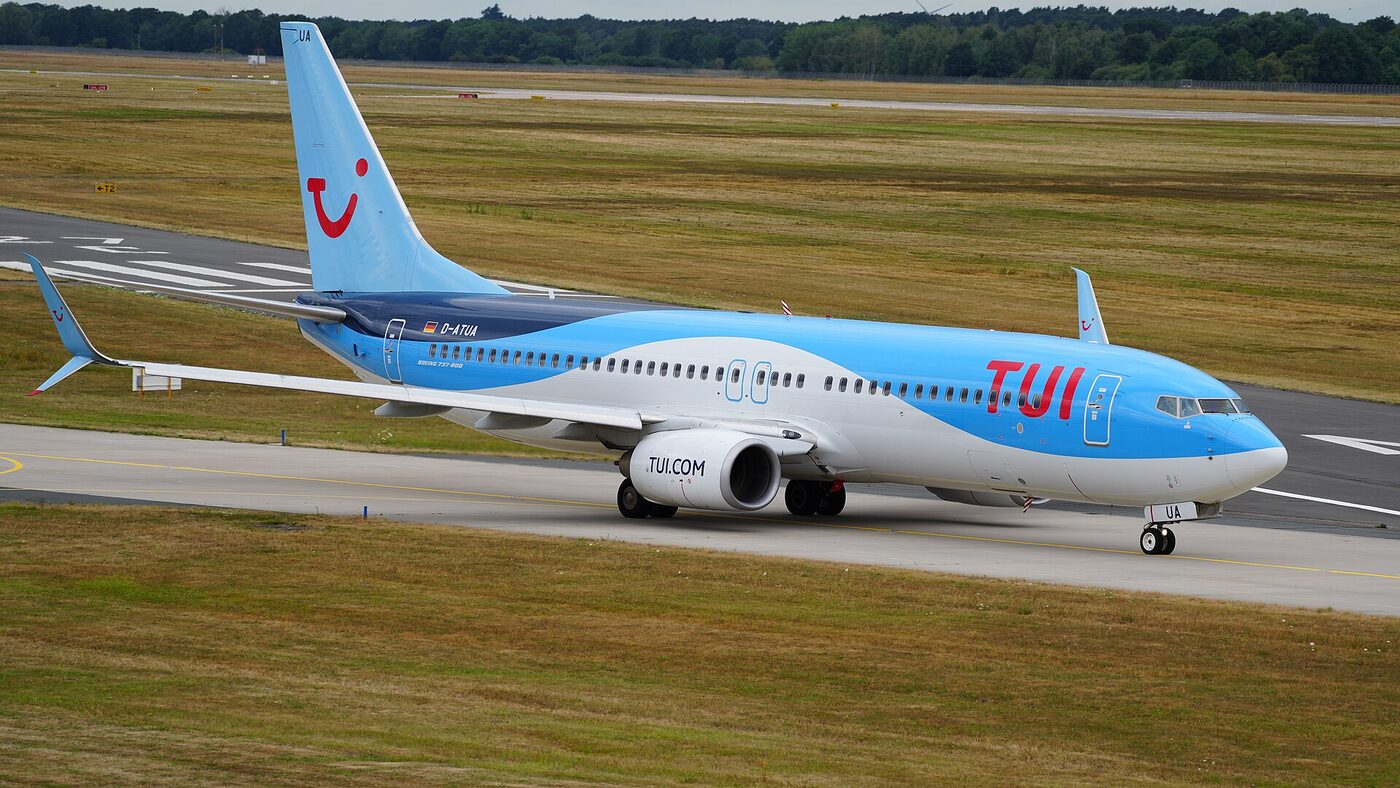
Count what TUI owns and the business model explains itself. One hundred and twenty-five aircraft. More than 460 hotels. Nineteen cruise ships. Around 67,000 employees, serving 34.7 million customers a year.
Very few travel companies own the plane a customer flies on, the bed they sleep in and the coach that takes them from one to the other. TUI does, and every practical advantage and every constraint of booking with it comes from that single fact.
What one contract changes
A package assembled from three suppliers has three sets of terms and three places to ring when a flight moves. A TUI holiday has one. When the aircraft is late, the transfer waits, because the transfer belongs to the same company as the aircraft. When the flight is cancelled, the hotel night is handled inside the same booking rather than argued over between two firms.
This is unglamorous and it is the whole point. It is also why TUI’s customer base skews towards families and towards travellers who would rather not spend an evening reconstructing a broken itinerary from a hotel lobby.
Where the company came from
TUI began in December 1968, when several German tour operators combined to form Touristik Union International. The group behind it traces back further, to an industrial company founded in 1923, which is why the corporate history and the travel history give different starting dates.
The travel business is the one that matters here, and it grew by acquisition across northern and western Europe until the brand covered most of the continent’s outbound package market. The hotel division is still expanding: the company reports over 460 properties and keeps adding to the count under its own brands.
TUI Musement, the part most people meet last
The excursions arm is a full business rather than a desk in the lobby. TUI describes Musement as “a global Tours & Activities business that offers experiences, transfers and multi-day tours in all major beach and city destinations”, and it operates in more than 100 destinations with over 700 experiences distributed across TUI’s own channels.
Its booking data reads like a decent summary of where European travel went this decade. Experiences in urban destinations grew by almost 25 per cent over the past year, which is the city break returning in force. Sport-related activities rose by nearly 37 per cent, a category that barely registered five years ago. And activities designed for local audiences, meaning the ones residents already book, grew 47 per cent, the fastest of the three.
Musement can be booked on its own, without a TUI holiday attached. Anyone who flew in on somebody else’s airline can still buy the skip-the-queue ticket and the day trip, and this is the piece of TUI most people use without noticing whose name is on it.
Our score, and what TUI is built for
We give TUI 4.5 out of 5, on the basis printed above: it is the only operator in this set that can put the flight, the room, the transfer and the excursion into a single contract with a single company standing behind all four.
Fourteen nights in the Canaries with two children, an airport transfer that meets the flight, a hotel the company inspects itself and a booking that can be paid in instalments is precisely the shape TUI is engineered around. So is a cruise that begins with a flight to the port, which is a small piece of logistics that quietly ruins a number of self-assembled holidays each summer.
The strength is in the assembly. Building a route through five cities, choosing a different kind of bed in each and changing the plan twice before departure, is the opposite job, and for that people go to Booking.com or work with a tailor-made consultant at Cox & Kings. TUI is at its best when the destination is settled and the goal is to arrive with everything already arranged.
Two notes for the booking page. TUI trades under local brands in different markets, and the flight allowance and transfer rules follow the market you book in rather than the destination. And the hotels the company owns outright carry its own brand names, which is the quickest way to tell, on a search results page, which properties it answers for directly.
Fleet, hotel and customer figures checked in September 2026.